
I just graduated, what should i learn for an export import job?
As a recent graduate, focus on practical trade, documentation, compliance, and communication skills before applying for an export import job. Build your understanding of how shipments move and how trade documents are checked; these export import job skills can help you understand the work employers expect.
Start with practical trade and communication skills
For export import job skills, combine a working understanding of trade processes with clear communication, accurate record keeping, and close attention to detail. Employers need graduates who can follow instructions, keep information consistent, and flag gaps before they create delays. You do not need to know every procedure on day one, but you should be able to work carefully and explain what you have checked.
Communication in an import-export role often means exchanging precise information with colleagues, suppliers, customers, freight providers, or customs contacts. Practise writing concise emails that state the shipment or order reference, the issue, what information is needed, and the next action. If a date, quantity, product description, or document detail is unclear, ask for confirmation rather than making an assumption.
Record keeping is just as practical. Use a consistent way to track order details, deadlines, messages, and document versions, and make sure a colleague can understand the record without needing you to explain it. Spreadsheet skills can help with organizing shipment information and checking entries, while careful proofreading can catch mismatched names, quantities, or dates.
Attention to detail is not simply avoiding typing errors; it means noticing when information does not agree and escalating it promptly. In an interview, use a real example from a course, project, internship, or part-time job to show how you handled detailed information, followed up on a task, or communicated a problem. Be specific about your actions and what you learned.
Learn how a shipment moves from order to delivery
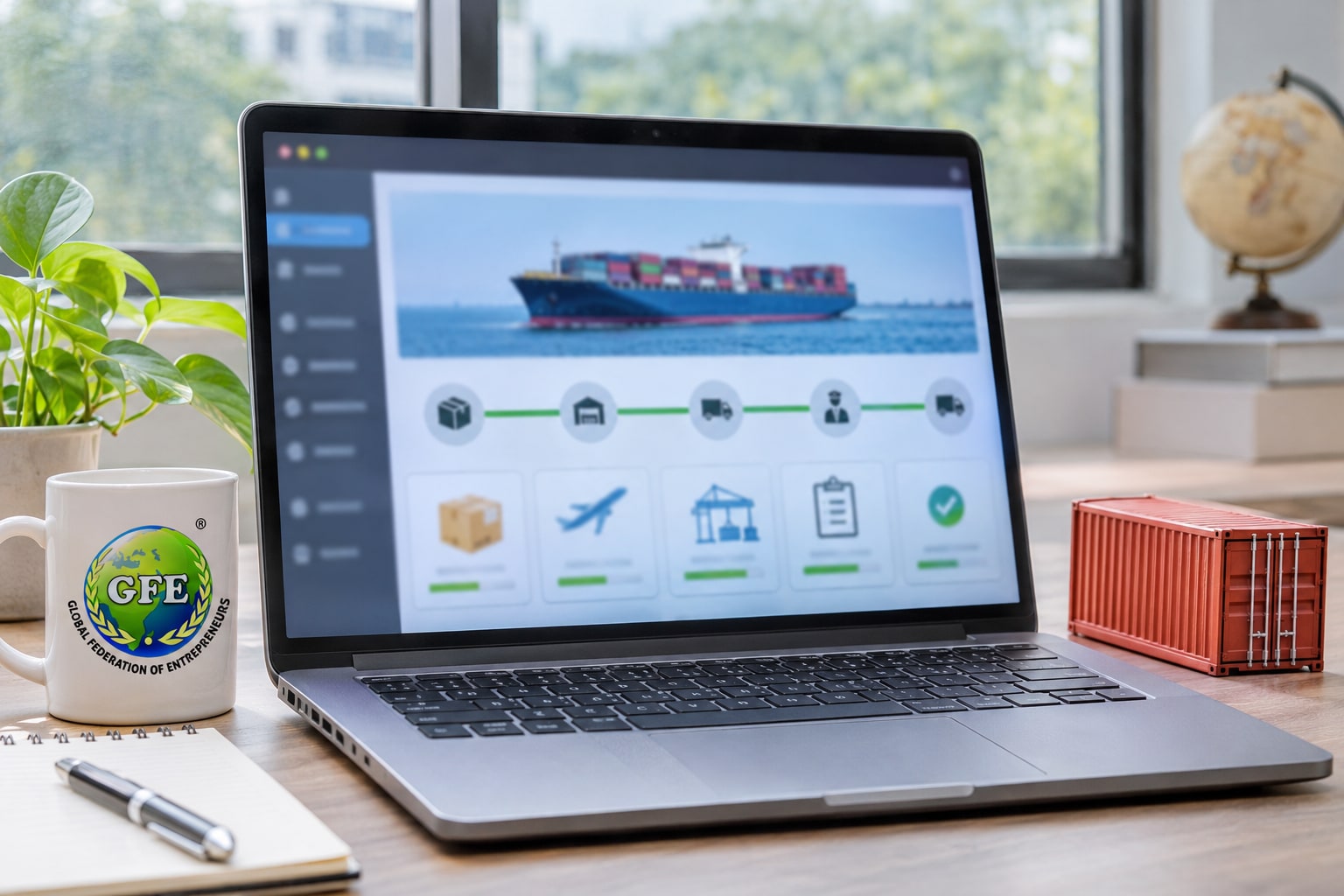
A shipment usually moves from a confirmed order through preparation, transport, customs processing and delivery. Knowing this sequence helps you see how an export-import job fits into the wider process: you may coordinate information between the buyer, supplier, freight forwarder and customs broker, while tracking deadlines and keeping records accurate.
The exact tasks depend on the role and shipment, but the workflow commonly includes:
- Confirm the order: Check product details, quantities, agreed delivery terms and key dates against the purchase order or sales contract.
- Prepare the shipment: Coordinate production or collection, packaging, pickup arrangements and the information needed for transport and customs clearance.
- Arrange transport: Work with the relevant logistics providers to confirm the mode of transport, booking, schedule and shipment references.
- Support customs processing: Ensure shipment details and required paperwork are ready for the responsible customs representative, and follow up if information is missing.
- Track delivery and close records: Monitor shipment status, communicate delays or changes, confirm delivery and file the final records.
For example, if a shipping schedule changes, a coordinator may need to update the buyer, check whether related dates are affected and make sure the team is working from the same shipment details. Attention to handoffs matters: an incorrect quantity, address or reference can create extra work or delay processing. In an entry-level role, you may handle only one part of the workflow, so learn how your task connects to the stages before and after it.
Practise trade documents and Incoterms
Practise reading commercial invoices, bills of lading and Incoterms 2020 by checking what each document or term records, then comparing details for consistency. These are useful foundations for export-import job skills because routine shipment work depends on accurate information, not just knowing document names.
A commercial invoice describes the sale and the goods. Check that the seller and buyer details, product descriptions, quantities, unit values, total value, currency and stated delivery terms agree with the relevant order or shipment information. Pay attention to whether descriptions are specific enough to identify the goods, and flag missing or conflicting details rather than assuming which version is correct.
A bill of lading is a transport document associated with carriage of goods by sea. When reviewing a sample, compare the shipper, consignee, goods description, package count, ports and shipment references with the available commercial information. The document type and exact fields can vary, so learn to follow the transaction requirements rather than treating one sample as a universal template.
Incoterms 2020 are rules that help define responsibilities between seller and buyer in a sale, including delivery points and the allocation of costs and risks. Practise identifying the named rule and place alongside the version, then check whether the invoice and shipment instructions use the same term. Do not treat Incoterms as a substitute for a complete sales contract or as a rule that determines every payment, ownership or customs obligation.
Build U.S. customs and export compliance awareness

For U.S. import-export roles, build a working understanding of customs requirements, product classification, export controls and trade records. You do not need to act as a compliance authority as a new graduate, but you should know when a shipment needs review and where to verify the rules before information is submitted.
On the import side, learn how customs entries rely on accurate product descriptions, classification, declared value, origin and supporting documents. Classification affects how goods are treated for customs purposes, so avoid guessing from a product name alone; details such as material, function and construction may matter. In a job, your role may involve gathering information, checking it against source documents and escalating discrepancies to the responsible customs professional.
For exports, understand that some goods, software and technology may be subject to export controls, and that requirements can depend on the item, destination, end user and intended use. Learn to flag a potential issue rather than assume that a routine shipment is automatically unrestricted. Keep records accurate, organized and consistent, including versions of documents and any decisions or approvals relevant to a shipment. Follow your employer’s record-retention procedures and do not alter records to make paperwork appear complete.
Use official sources for current requirements, since rules and guidance can change. For U.S. imports, consult U.S. Customs and Border Protection; for export controls, check the U.S. Department of Commerce’s Bureau of Industry and Security and the relevant government guidance for the product and transaction. In an interview, explain how you would verify a requirement and raise uncertainty, rather than presenting an unverified answer as fact.
Use practical training to connect learning with job tasks
Practical training can help you connect export-import concepts with the tasks employers may expect you to handle. GFE Business Export Import Training includes practical instruction and live sessions for people building global trade skills or preparing to enter the field. Use this learning to practise how trade tasks fit together, rather than treating training as a promise of employment.
As you compare training options, check whether the instruction lets you work through realistic tasks, ask questions and understand why each step matters. For example, you might practise reviewing a shipment file, spotting missing information, following an order through its key stages, or communicating a delay clearly to a colleague. These exercises can help you notice where you need more practice before applying for a specific role.
Live sessions are useful when you need clarification on a process or want to discuss how a task may vary by shipment or role. Bring questions drawn from job descriptions you are considering, and keep a record of the topics you have practised. You can then explain your learning in concrete terms during an interview, while being clear about what you have studied and what you have not yet handled in a workplace.
Training is one part of preparation, alongside checking the requirements of each position and building careful work habits. GFE Business Export Import Training may suit graduates who want structured, practical learning with live guidance as they develop trade skills; it does not guarantee a job or replace the experience an employer requires.
Frequently asked questions
What should a recent graduate learn first for an export-import job?
Start with the shipment workflow, clear business communication, accurate record keeping, and careful checking of trade information. Then practise reading common documents and learn how to verify requirements relevant to the roles you are targeting.
Which export-import documents should I learn to handle first?
Learn to read and check commercial invoices and bills of lading, including whether key details match across a shipment. Required documents vary by shipment, product, destination, and role, so practise checking details rather than assuming one fixed document set applies everywhere.
What are Incoterms 2020, and why should a graduate understand them?
Incoterms 2020 are rules that help define responsibilities between seller and buyer, including delivery points and the allocation of costs and risks. Learn to identify the named rule and place, and check that shipment instructions use the same term. They do not replace a complete sales contract or determine every payment, ownership, or customs obligation.
Do I need to know every trade document and regulation before applying for an entry-level job?
No. Focus first on the core shipment workflow, common documents, Incoterms, and how to find applicable compliance requirements. Employers may expect different knowledge depending on the role, so compare job descriptions and continue building practical skills.
Where can I check current U.S. trade and export rules?
Use official U.S. government sources, including U.S. Customs and Border Protection for customs requirements and the Bureau of Industry and Security for export controls. Check the relevant agency guidance for the product and transaction, since requirements can vary and change.
How can I practise export-import tasks before getting a job?
Work through sample shipment scenarios: compare an invoice with an order, trace the stages from order to delivery, and write a concise email requesting clarification when details do not match. Keep your notes and checklists so you can discuss specific examples in an interview.
Does export-import training guarantee a job?
No. Training can help you practise trade concepts and tasks, but it does not guarantee employment or replace workplace experience an employer may require.
Prepare a focused learning plan before you apply
Before applying, follow a short learning plan: review the requirements of the roles you want, practise the tasks they list, and identify any gaps that need attention. Start with a few recent job descriptions for entry-level export-import positions, then note repeated duties such as preparing shipment records, coordinating updates, checking details, or tracking an order. This gives you a practical focus instead of trying to learn every part of international trade at once.
Next, set aside time to work through sample trade scenarios. For example, trace a shipment from a customer order to delivery and make a checklist of the information you would verify at each stage. Practise checking a sample commercial invoice against an order, and write a concise email requesting clarification when a detail does not match. Keep your notes and checklists together so you can review your progress and discuss specific examples during interviews.
Before applying, compare your practice with the role requirements again. Prioritise any missing knowledge that appears repeatedly, and check current U.S. requirements through official government sources when a task involves compliance. If you want structured practical learning with live sessions, consider GFE Business Export Import Training as a way to develop trade skills for the roles you are targeting; training can support preparation but does not guarantee a job.
Conclusion
As a recent graduate, focus on practical trade, documentation, compliance, and communication skills, and practise checking shipment information carefully. Use job descriptions to guide your learning, verify current requirements through official sources, and explain your preparation with specific examples when you apply. Structured training can support your learning, but it does not guarantee a job.