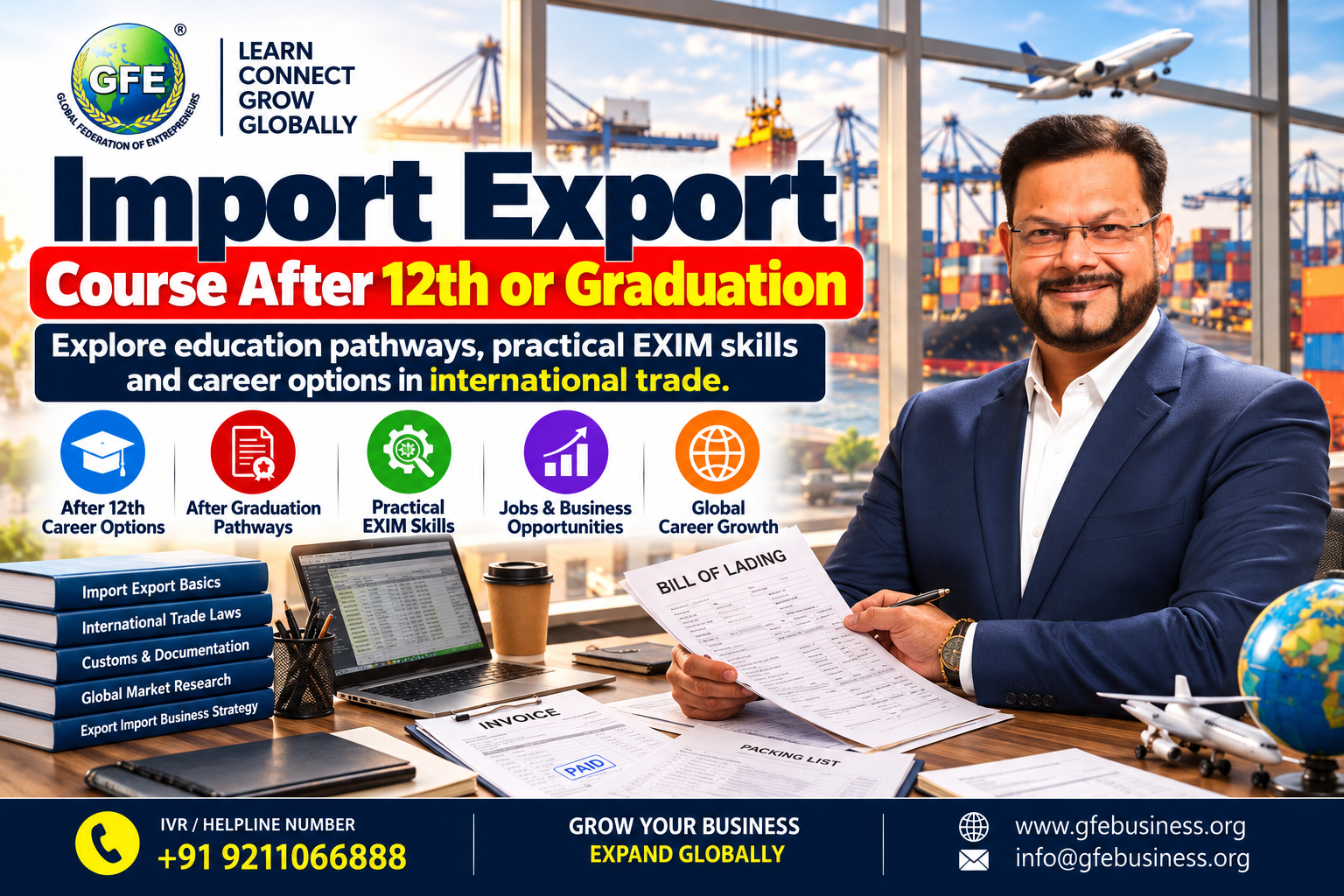
If you have completed Class 12 or graduation and want to explore a career in international trade, an import export course can help you understand how businesses buy and sell goods across international borders. The right training introduces you to trade documentation, buyer research, logistics, pricing, payment methods and regulatory requirements.
Your best starting point depends on your education, career goals and whether you want a job, further education or your own export-import business. You do not necessarily need a specialised international business degree to begin learning the fundamentals of EXIM operations.
Yes. Many short-term practical EXIM training programmes are designed for beginners and do not require a specific degree. However, eligibility depends on the individual institute and programme. Students who have completed Class 12 can explore foundational training, while graduates can use specialised training to build job-related skills or prepare for entrepreneurship.
Import Export Career Options After Class 12 or Graduation
1. Export Documentation Executive
Learn to prepare and check commercial invoices, packing lists, certificates of origin and other documents relevant to a shipment. Actual responsibilities depend on the employer, product and destination market.
2. Import Export Operations Executive
Support order processing, shipment coordination, document tracking and communication among suppliers, buyers, freight forwarders and customs brokers.
3. Logistics and Freight Coordination
Help coordinate cargo movement, shipping schedules, freight quotations and shipment updates. Knowledge of transport modes, Incoterms and delivery timelines is useful.
4. International Sales and Business Development
Research overseas markets, identify potential buyers, prepare quotations and follow up on trade enquiries. Communication, product knowledge and commercial negotiation are important skills.
5. Sourcing and Procurement
Assist companies with supplier research, quotation comparisons, product specifications, purchase orders and delivery coordination.
6. Export Import Entrepreneur
Start an import-export business after researching demand, selecting a product, assessing costs, completing applicable registrations and developing a credible buyer or supplier network. A course can help you prepare, but it cannot guarantee orders or profits.
Import Export Training After 12th vs Graduation
| Factor | After Class 12 | After Graduation |
|---|---|---|
| Starting point | Learn international trade fundamentals | Build on existing education and specialise |
| Useful skills | Communication, basic business maths and computer skills | Documentation, market research, analysis and negotiation |
| Possible next step | Foundational training, further education or entry-level opportunities | Role-specific training, job applications or business planning |
| Course selection | Choose beginner-friendly lessons and guided practice | Prioritise applied exercises and skills relevant to your target role |
Neither route is automatically better. Choose based on your current knowledge and the requirements of the course or job you want to pursue.
What Should an Import Export Course Teach?
- International trade fundamentals and the export-import process.
- Product selection, HS code research and target-market analysis.
- Importer Exporter Code (IEC) and applicable business registrations.
- Commercial invoices, packing lists and other trade documents.
- Incoterms, pricing, quotations and international payment methods.
- Shipping, freight forwarding, customs procedures and logistics coordination.
- Buyer and supplier research, email outreach and negotiation.
- Trade risks, compliance checks and practical shipment exercises.
Compare the syllabus with the Import Export Course Syllabus 2026 guide. For regulatory information, refer to the Directorate General of Foreign Trade (DGFT) and the official ICEGATE customs portal.
How to Start Your Import Export Career: Step-by-Step
- Choose your direction. Decide whether you want a documentation, operations, logistics, sales or entrepreneurship pathway.
- Build your fundamentals. Understand the export-import workflow, trade terminology and the responsibilities of each party.
- Practise with documents. Work through sample invoices, packing lists, quotations and shipment scenarios.
- Learn compliance basics. Understand applicable registrations and verify current requirements through official sources.
- Develop market research skills. Learn to evaluate product demand, buyer suitability, competition and landed or export costs.
- Build a portfolio. Prepare a sample documentation set, a market research report or a buyer-outreach exercise.
- Apply or prepare to trade. Target relevant entry-level roles, or develop a business plan and verify all requirements before conducting transactions.
How to Choose the Right Import Export Course
Before enrolling, compare the syllabus, trainer experience, learning format, practical exercises, student support, certificate details and total cost. Ask whether the course covers the skills needed for your preferred career path, and verify any claims about placement assistance or business outcomes.
GFE Business provides information about its import-export training and business setup support. You can also review its online import-export course guide to understand the online learning option. Check the current programme details directly with the provider before enrolling.
Is Import Export Training Worth It?
Training can be useful if it fills gaps in your knowledge and gives you opportunities to practise real trade workflows. Its value depends on the quality of instruction, practical application and your ability to use those skills. A certificate alone does not guarantee employment, a successful export order or a particular income.
Frequently Asked Questions
Can I do an import export course after 12th?
Yes. Many introductory programmes accept beginners after Class 12. Confirm the eligibility rules of the specific course before enrolling.
Which course is suitable after graduation?
A practical EXIM course covering documentation, logistics, market research, international payments and buyer communication may suit graduates who want job-related skills or to explore a trade business.
What jobs can I apply for after import export training?
Depending on your qualifications and skills, possible entry points include export documentation, trade operations, logistics coordination, sourcing and international sales support.
Do I need an IEC to study import export?
No. You can study import-export fundamentals without first obtaining an IEC. Whether an IEC is required for an actual transaction depends on the applicable rules and exemptions. Check the current DGFT guidance before trading.
Can I start an export business after completing a course?
You can use your training to prepare a business plan, research products and markets, and understand compliance requirements. Commercial success still depends on demand, pricing, execution, finance and risk management.
Is an online import export course useful?
Online learning can be useful when it includes clear lessons, practical exercises, document examples and appropriate instructor support. Consider your learning preferences and the course format before deciding.
Conclusion
An import export course after graduation or Class 12 can be a practical starting point for exploring international trade. Focus on useful skills, guided practice, regulatory awareness and a clear career objective instead of choosing a programme based on promises alone.
Explore GFE Business to review available training and business support options, then choose a programme that fits your goals and current level of experience.