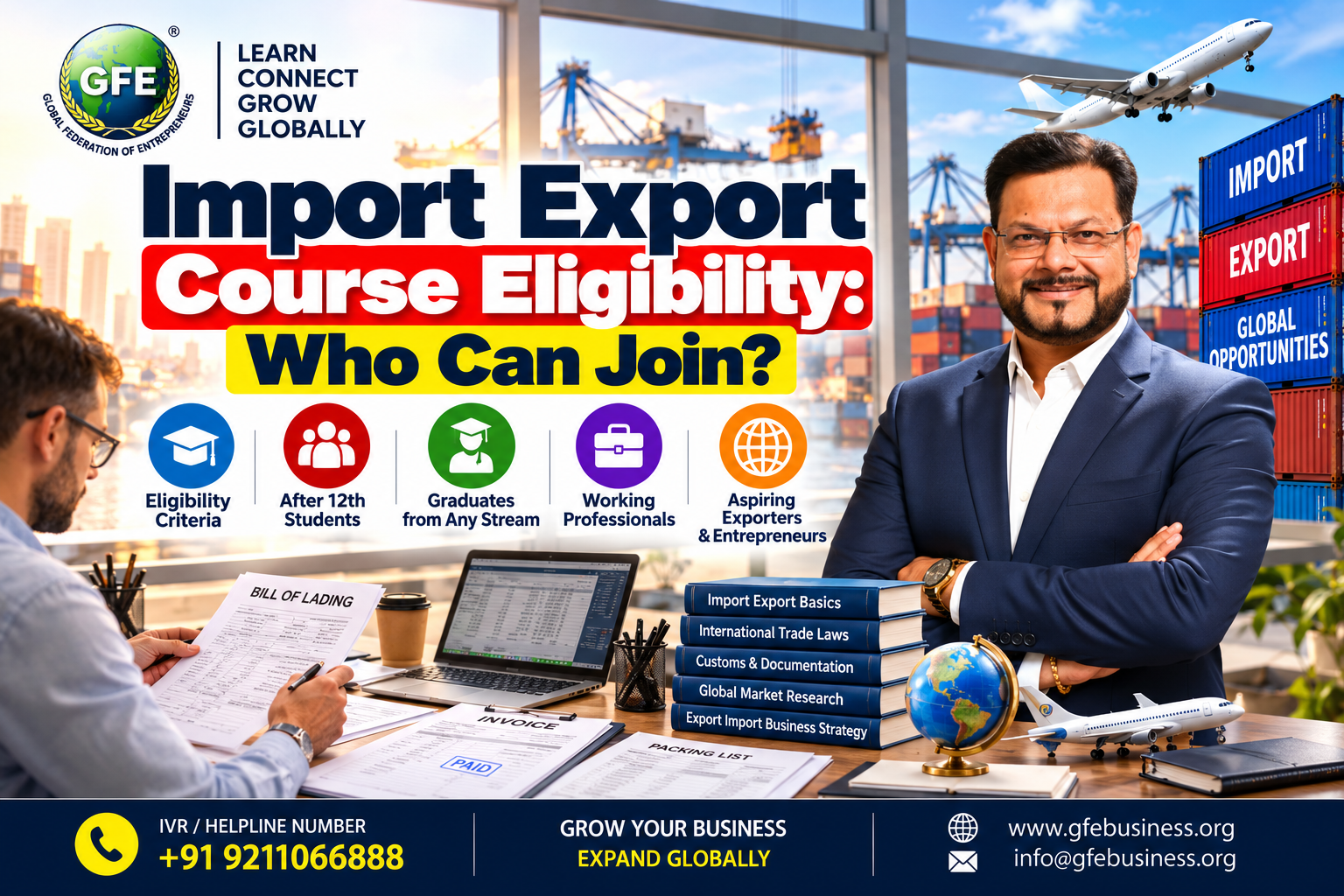
Who Can Join an Import Export Course?
Many introductory EXIM (export-import) training programmes are designed for beginners. Depending on the provider, they may be suitable for people from different educational and professional backgrounds.
1. Students After Class 12
Students who have completed Class 12 can explore foundational import-export training to understand international trade, product research, documentation, logistics and business communication. Check the admission requirements of the particular course, especially if it is a formal diploma or degree programme.
2. Graduates From Any Stream
Graduates in commerce, business administration, arts, science and other disciplines can consider practical EXIM training. Your existing education may influence which skills you already have, but the most suitable programme depends on your goals and its stated entry requirements.
3. Working Professionals
People working in sales, operations, procurement, logistics, finance or administration may use import-export training to understand international transactions and explore related responsibilities. Professionals changing careers should look for practical exercises and course content relevant to their target role.
4. Entrepreneurs and Startup Founders
People planning to launch a trading business can study product selection, overseas market research, quotations, trade documentation, logistics, payment terms and compliance. Training can help you understand the process, but it does not guarantee buyers, orders or business profits.
5. Existing Manufacturers, Traders and Wholesalers
Businesses already selling products domestically may use import-export training to assess international expansion opportunities. Before approaching overseas buyers, research the target market, product standards, landed costs, applicable export restrictions and logistics requirements.
6. Homemakers, Freelancers and Aspiring Entrepreneurs
People exploring self-employment can learn about international sourcing, export documentation, buyer communication and trade operations. The appropriate business model depends on their resources, skills, product access and legal arrangements. A course alone does not establish a business or guarantee an income.
What Qualifications Are Required for an Import Export Course?
There is no single admission requirement that applies to every import-export training programme in India. Short-term practical courses may accept beginners, whereas formal academic programmes may require specific educational qualifications, marks or other admission criteria.
| Applicant | Possible starting point | What to verify |
|---|---|---|
| Class 12 student or graduate | Introductory or practical EXIM training | Minimum education and course prerequisites |
| Working professional | Role-specific or practical training | Schedule, format and relevant modules |
| Entrepreneur or business owner | Business-focused import-export training | Documentation, market research and compliance coverage |
| Beginner without trade experience | Foundation-level programme | Whether prior experience is required |
Before enrolling, review the Import Export Course Syllabus 2026 and compare its topics with the skills you want to develop. Confirm the actual eligibility conditions with the training provider rather than assuming every course follows the same rules.
Who Can Start an Import Export Business in India?
The ability to learn international trade and the ability to conduct actual trade are separate matters. A person may learn EXIM procedures without already operating a business. Starting commercial import-export activities requires appropriate business arrangements and compliance with applicable laws and product-specific regulations.
Depending on the business model and applicable requirements, entrepreneurs may explore a sole proprietorship, partnership, limited liability partnership or company structure. The appropriate structure depends on ownership, liability, taxation, financing and operational needs. Confirm the relevant legal and registration requirements before commencing business.
Basic requirements to investigate before trading
- Business and tax arrangements: Determine the appropriate business structure and applicable registrations based on your activities.
- Importer Exporter Code (IEC): Check the current Directorate General of Foreign Trade (DGFT) requirements and exemptions. An IEC is generally required for importing or exporting goods, subject to applicable exemptions and rules.
- Product eligibility: Confirm the product's classification, export or import policy status, and any licences, permits, standards or additional approvals that may apply.
- Documentation: Understand commercial invoices, packing lists, transport documents and other paperwork relevant to the transaction.
- Customs procedures: Understand the relevant filing and clearance process, including requirements that depend on the shipment and goods.
- Financial preparation: Assess working capital, supplier payments, freight, insurance, duties, taxes and the risk of delayed payment.
- Market research: Check buyer demand, competition, product specifications, destination-market rules and total transaction costs.
For current official guidance, consult the Directorate General of Foreign Trade (DGFT) and the ICEGATE customs portal. Requirements vary by transaction, product and destination, so verify the applicable rules before proceeding.
Do You Need an Import Export Code Before Joining a Course?
No. You can learn about international trade, practise sample documentation and study the export-import process without first obtaining an IEC for your training. The IEC question becomes relevant when you plan to conduct actual commercial import or export activities.
DGFT guidance describes IEC requirements for those intending to import or export, subject to specified exemptions. Do not treat course enrolment as a business registration, and do not assume that completing training automatically authorises a commercial transaction.
What Should You Learn Before Starting a Business?
A useful beginner programme should help you understand how a trade transaction moves from product selection to payment and delivery. Consider whether the course covers:
- Product research and international market selection.
- HS code research and product-specific requirements.
- Buyer and supplier identification and verification.
- Export quotations, costing and applicable Incoterms.
- Commercial invoices, packing lists and other relevant trade documents.
- Shipping, freight forwarding, customs and logistics coordination.
- International payment methods, transaction risks and cash-flow planning.
- Applicable registrations, compliance and official information sources.
Review the Import Export Training Course 2026: Fees, Duration and Curriculum guide for factors to consider when comparing course options. Confirm current fees, duration, certificate details and available support directly with the provider.
How to Choose the Right Import Export Training
- Define your goal. Decide whether you want to understand international trade, prepare for a job or plan a business.
- Check entry requirements. Confirm education, experience and any prerequisites specified by the provider.
- Compare practical content. Look for document exercises, product research, costing and realistic trade scenarios.
- Review the learning format. Check lesson delivery, trainer interaction, assignment support and access to learning materials.
- Verify provider claims. Ask for clear information about certificates, placement assistance and business support rather than relying on unqualified promises.
- Plan the next step. Identify the skills, registrations or additional guidance you will need after training.
GFE Business provides information about its online import-export course in India. Review the programme details and confirm whether its current format and content suit your objectives before enrolling.
Can You Start an Import Export Business Without Experience?
You can begin learning international trade without prior industry experience. Whether you can successfully operate a business depends on your preparation, product knowledge, compliance, market demand, finances and ability to manage commercial risks.
Beginners can reduce avoidable mistakes by studying the process, practising documentation, verifying suppliers and buyers, calculating transaction costs and checking official requirements before committing money to a shipment.
Frequently Asked Questions
Who can start an import export business in India?
People interested in international trade can explore starting a business if they meet the applicable legal, registration, product and transaction requirements. The correct requirements depend on the business structure, goods and proposed activity.
Can I join an import export course after Class 12?
Many introductory training programmes accept learners after Class 12, but admission requirements vary. Confirm the eligibility criteria of the specific programme.
Can a graduate from any stream join import-export training?
Some practical training programmes accept graduates from different academic backgrounds. Formal academic programmes may have specific requirements, so check the provider's admission rules.
Is a degree compulsory to start an import export business?
A specialised international business degree is not universally required to establish a trading business. However, the relevant business, tax, customs, product and regulatory requirements must still be met.
Can a beginner start an export business without an IEC?
A beginner can research products, learn the procedures and prepare a business plan without an IEC. Before carrying out actual import or export activities, check the current DGFT rules, including applicable exemptions.
Does completing an import export course guarantee business success?
No. Training can build knowledge and practical skills, but business results depend on factors such as demand, pricing, compliance, working capital, logistics, buyer relationships and risk management.
Which subjects are useful for learning import-export?
Business communication, basic mathematics, research, documentation and analytical skills are useful. The importance of each skill depends on whether you plan to work in operations, logistics, sales or entrepreneurship.
Conclusion
Import-export training can be a starting point for students, graduates, working professionals and entrepreneurs who want to understand international trade. The key is to select a programme suited to your goals and distinguish educational eligibility from the legal requirements for operating a business.
Study the process, practise relevant tasks and verify current regulatory requirements before trading. Explore GFE Business to review available import-export learning options and choose your next step based on your experience and objectives.