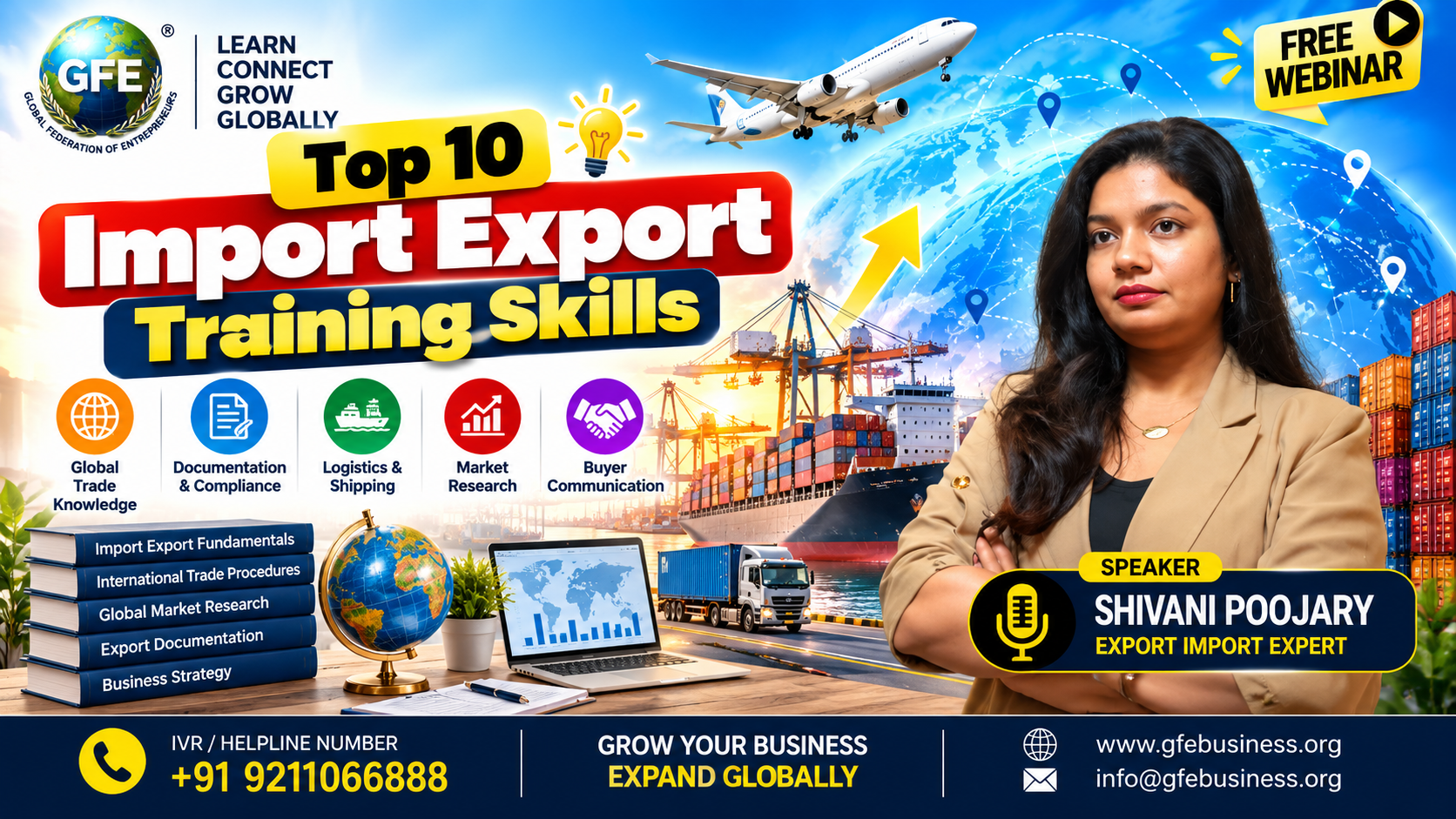
These skills can help students, job seekers, working professionals and aspiring entrepreneurs understand the export-import process. Their value depends on how well learners can apply the knowledge to realistic trade scenarios, not simply on completing a course or receiving a certificate.
Whether you want to work in export operations or prepare to start your own trading business, understanding the following 10 skills can help you evaluate a training program and identify what you need to practise.
1. Understanding the Import Export Process
The first skill is understanding how an international trade transaction moves from an initial business enquiry to delivery and payment. An exporter and importer must coordinate commercial terms, product requirements, documentation, transportation and payment responsibilities.
Training should explain the typical sequence of activities and how the different parties work together.
- Understanding the roles of exporters, importers, freight forwarders, customs brokers and banks.
- Learning the main stages of an export or import transaction.
- Understanding purchase orders, quotations and agreed commercial terms.
- Recognising where documentation, logistics and compliance affect the process.
Practical exercise: Map a sample export transaction from buyer enquiry and quotation through shipment, document submission and payment follow-up.
2. Export Import Documentation
Documentation is one of the core skills in EXIM training. International shipments require accurate information about the parties, goods, quantities, values, packaging and transportation. The documents needed vary according to the product, destination, payment arrangement and applicable rules.
A practical program should explain the purpose and preparation of documents such as:
- Proforma invoice.
- Commercial invoice.
- Packing list.
- Shipping bill and other applicable customs declarations.
- Bill of lading or air waybill, depending on the transport mode.
- Certificate of origin, where required or applicable.
- Insurance and banking documents relevant to the transaction.
Practical exercise: Prepare a sample commercial invoice and packing list, then check whether the product description, quantities, values, package details and other relevant information are consistent.
For official information about customs filing, learners can refer to the ICEGATE customs portal.
3. Product Research and HS Code Classification
Choosing a product for international trade requires more than finding something that appears popular. Exporters need to research product suitability, supplier reliability, target-market demand and the applicable requirements for the goods.
Training should also introduce the Harmonized System (HS), an internationally used system for classifying traded goods. The correct classification matters because it can affect customs declarations, applicable duties, trade measures and regulatory requirements.
- Researching product specifications and potential markets.
- Understanding the basics of HS code classification.
- Checking export policy status and product-specific requirements.
- Comparing supplier quotations, quality and availability.
Practical exercise: Select a sample product, research its likely classification using reliable sources and identify which details must be confirmed before a commercial shipment.
4. International Market Research and Buyer Identification
Exporters need to identify suitable markets and potential customers rather than sending the same sales message to every overseas business. Buyer research helps businesses understand which companies may need their products and how to approach them professionally.
Useful skills include:
- Researching target countries and customer segments.
- Studying competitor products, prices and positioning.
- Finding potential importers, distributors, wholesalers or retailers.
- Checking company information and assessing buyer credibility.
- Writing relevant introductory emails and following up professionally.
Practical exercise: Build a small sample buyer-research sheet with company names, websites, countries, product relevance, contact details where publicly available and a reason each company may be a suitable prospect.
Buyer identification is a research skill, not a guarantee that a company will respond, place an order or become a customer.
5. Export Costing, Pricing and Quotations
Export costing helps businesses estimate what it will cost to supply a product internationally and whether the proposed selling price is commercially viable. A low supplier price does not automatically mean a profitable export transaction.
A costing exercise may need to account for:
- Product purchase or manufacturing cost.
- Packaging, handling and inland transportation.
- Freight, insurance and other shipment-related costs.
- Applicable duties, taxes, fees and compliance costs.
- Currency conversion, payment charges and financing costs.
- The seller's overheads, risk allowance and intended margin.
Training should also introduce relevant Incoterms rules published by the International Chamber of Commerce (ICC). These rules help define certain responsibilities, costs and risks between sellers and buyers when incorporated into a contract.
Practical exercise: Prepare a quotation using sample costs, clearly state the currency and delivery term, and calculate the expected contribution before accepting the order.
6. Shipping, Logistics and Freight Coordination
International shipments require coordination between suppliers, transport providers, freight forwarders, customs representatives and customers. Logistics knowledge helps learners understand the options and information involved in moving goods across borders.
Important topics include:
- Understanding sea, air and other available transport options.
- Comparing freight quotations and estimated transit times.
- Understanding basic shipment planning and packaging requirements.
- Coordinating pickup, dispatch and shipment tracking.
- Recognising how shipping schedules and delays affect delivery commitments.
Practical exercise: Compare two hypothetical freight quotations and identify differences in cost, transit time, included services and additional charges.
7. Customs Procedures and Trade Compliance
Exporters and importers must understand the regulatory requirements applicable to their goods and transactions. Training should help learners recognise which requirements to check and where to find authoritative information.
Topics may include:
- Understanding the Importer Exporter Code (IEC) and applicable registration requirements.
- Checking whether goods are freely exportable, restricted, prohibited or subject to specific conditions.
- Understanding the purpose of customs declarations and supporting documents.
- Identifying product-specific licences, certificates and standards where applicable.
- Learning how to consult current government guidance instead of relying on outdated checklists.
Practical exercise: Use an example product to create a compliance checklist covering classification, export policy, destination-market rules and documents that need to be confirmed.
For current Indian foreign-trade guidance, refer to the Directorate General of Foreign Trade (DGFT). The requirements for a real shipment should always be checked against the applicable rules.
8. International Payment Methods and Transaction Risk
Payment knowledge helps exporters understand how money is transferred, which documents may be involved and how contractual payment terms influence risk. The suitability of a payment method depends on the buyer, seller, banking arrangements, country and transaction.
A training program may introduce:
- Advance payment and payment after shipment.
- Documentary collections, including documents against payment and documents against acceptance.
- Letters of credit and the importance of complying with their terms.
- Foreign exchange considerations and payment-related charges.
- Buyer verification, fraud warning signs and overdue-payment follow-up.
Practical exercise: Compare two sample payment arrangements and identify the seller's exposure, document requirements and questions to resolve before agreeing to the transaction.
Training should explain the risks and trade-offs of each arrangement rather than presenting one payment method as universally safe.
9. International Business Communication and Negotiation
Clear communication helps exporters understand buyer requirements, prepare accurate quotations, resolve questions and manage expectations. International trade often involves written communication across time zones, languages and different business practices.
Useful skills include:
- Writing concise and professional business emails.
- Preparing product introductions and quotations.
- Asking buyers relevant questions about specifications and order quantities.
- Negotiating prices, delivery terms and payment conditions.
- Following up without sending repetitive or irrelevant messages.
- Keeping records of agreed terms and outstanding questions.
Practical exercise: Draft a first-contact email for a relevant overseas buyer, prepare a quotation response and write a professional follow-up message.
10. Digital Tools, Record-Keeping and Trade Risk Management
Modern export-import work also involves digital research, spreadsheets, online communication and systematic record-keeping. These tools help businesses organise enquiries, monitor costs, coordinate shipments and review performance.
Training should help learners practise:
- Maintaining buyer and supplier databases.
- Tracking enquiries, quotations, orders and follow-ups.
- Using spreadsheets to calculate costs and compare offers.
- Organising documents and maintaining consistent records.
- Identifying commercial, payment, shipping and compliance risks.
- Using online trade research tools responsibly and verifying information before acting.
Practical exercise: Build a basic export-order tracker showing the buyer, product, quotation status, estimated costs, documents required, shipment milestones and next action.
Summary: The 10 Import Export Training Skills
| Skill | What you should be able to practise |
|---|---|
| Import-export process | Map a transaction from enquiry to payment. |
| Documentation | Prepare and cross-check sample trade documents. |
| Product research and HS codes | Research products and identify classification questions. |
| Buyer identification | Build and assess a relevant prospect list. |
| Costing and pricing | Prepare a quotation with a transparent cost calculation. |
| Shipping and logistics | Compare freight options and coordinate shipment milestones. |
| Customs and compliance | Identify applicable requirements and official sources. |
| International payments | Compare payment terms and transaction risks. |
| Communication and negotiation | Prepare professional buyer emails and quotations. |
| Digital tools and risk management | Maintain an organised order tracker and risk checklist. |
How to Choose an Import Export Training Program
Not every course provides the same depth of practical learning. Before enrolling, check whether the curriculum teaches you to apply the skills rather than merely memorise terminology.
- Review the syllabus: Check whether documentation, costing, buyer research, logistics, compliance and payments are covered.
- Ask about practical exercises: Look for sample documents, quotation exercises, market research and shipment scenarios.
- Understand the support offered: Confirm the availability and scope of instructor guidance and feedback.
- Check course terms: Verify duration, fees, certification, access period and any additional charges.
- Assess the relevance: Choose a program suited to your intended career or business goals.
For a more detailed curriculum breakdown, read the Import Export Course Syllabus 2026 guide. You can also review the Import Export Training Course 2026: Fees, Duration and Curriculum guide when comparing programs.
Join Our Import Export Webinar
Want to learn more about international trade and the practical steps involved in export-import operations? Register for our webinar to explore the fundamentals of the import-export business and the next steps in your learning journey.
Register for the Import Export Webinar
Check the registration page for the current schedule, availability and webinar details before registering.
Frequently Asked Questions
What skills are taught in an import export training program?
Common learning areas include trade processes, documentation, product research, HS code classification, buyer identification, export costing, logistics, customs compliance, international payment methods and business communication. The exact curriculum varies by provider.
Which import export training skill should beginners learn first?
Beginners should start by understanding the overall import-export process. This provides context for learning documentation, pricing, buyer research, shipping, payments and compliance.
Is export documentation important for an import export career?
Yes. Documentation is an important operational skill because trade documents must contain accurate and consistent information. The documents required depend on the shipment, product, destination and applicable rules.
Does import export training teach how to find international buyers?
Some programs cover market research, buyer identification, prospect verification and outreach. Review the syllabus to determine whether these topics include practical exercises and feedback.
Can I start an import export business after training?
Training can help you understand the process and prepare for commercial activity, but it does not automatically complete business registrations or authorise every transaction. You must verify the applicable requirements, arrange suppliers and buyers, assess costs and manage commercial risks.
Does a certificate guarantee an import export job or successful business?
No. A certificate alone does not guarantee employment, buyers, orders or profits. Outcomes depend on your skills, experience, market conditions, business preparation and ability to execute transactions.
Conclusion
Import export training skills are most useful when learners can apply them to realistic trade activities. Understanding documentation, researching buyers, calculating costs, coordinating shipments and checking compliance can help you prepare for the responsibilities involved in international trade.
When evaluating a course, focus on the quality of its practical exercises, the clarity of its curriculum and the support available to learners. Explore the GFE Business website to review available training information and identify a learning option suited to your goals.